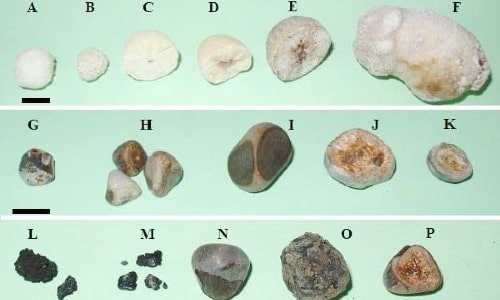
Gallstones are very common in the general population, and gallbladder surgery is one of the most frequently performed surgical procedures in the United States. When gallstones become symptomatic, causing what is often referred to as a gallstone “attack,” the most reliable form of treatment is the removal of the entire gallbladder.
When patients start experiencing gallstone pain, they are usually referred to an imaging center for a comprehensive abdominal ultrasound to confirm a gallstone or gallbladder disease and rule out other abdominal conditions. The report we receive from the imaging states the size of the gallstone. So, what does the size of the stone tell us?
- First, the larger the gallstone, the lower the likelihood that it can be passed out of the gallbladder into the common bile duct. A large-sized stone cannot pass through the small cystic duct and, therefore, not cause the complications of jaundice or pancreatitis associated with gallstones.
- Second, studies have shown the correlation between the size of a gallstone & gallbladder cancer. Many factors affect gallbladder cancer, and it remains a relatively uncommon disease in the United States. However, most patients with gallbladder cancer have gallstones. This may be, in part, related to the organ’s inflammatory response to the stone.
- Lastly, the size of the gallstone is possibly less important than whether the gallstone is symptomatic or asymptomatic. We tend to remove the gallbladder only when gallstones become symptomatic, regardless of the size of the stone (unless it is huge).
What Is a Normal Size Gallstone?
The answer is that there is no standard size for gallstones. Some patients have anywhere from a few to hundreds of tiny gallstones, and other patients will have a single gallstone as large as 5 cm, although a gallstone of this size is rare.
When We Treat Gallstones
Not everyone with gallstones will become symptomatic. Approximately 10 to 20% of those with gallstones ever experience symptoms. Others may experience a single attack, typically mistaken for food poisoning or other digestive issues, and never have another. However, typically, after the first attack, the chances of a subsequent attack increase dramatically. These subsequent attacks may come frequently or infrequently.
Ultimately, no matter the size of the stone, it is essential that symptomatic stones are treated early because they can lead to more severe complications of gallbladder disease. Patients who have their gallbladder removed electively tend to have fewer complications and a shorter recovery.


